


Policy Debate: A Beginner's Guide to Debating

Succeeding in debate in schools requires more than individual talent; it is a team sport. Successful participants in debating clubs know that working seamlessly with a partner is vital. When both members of a team contribute equally to research and strategy, they gain a significant competitive advantage in any debate competition.
Policy debate is an exhilarating way to sharpen your public speaking skills, conduct deep research, and learn to think on your feet, all while working in a team. Whether you are curious about the policy debate structure or looking for ways to improve your debate writing, this guide breaks down the essentials of this competitive debating activity.
What is Policy Debate?
Policy debate is a competitive academic activity in which two teams argue over whether the government should implement a specific policy. It is a highly structured environment where you learn to tackle real-world problems. Whether you are participating in a local debate competition or a national debate, you will find that the policy debate structure demands precision, evidence, and strategic thinking.
Policy Debate Flow for Students
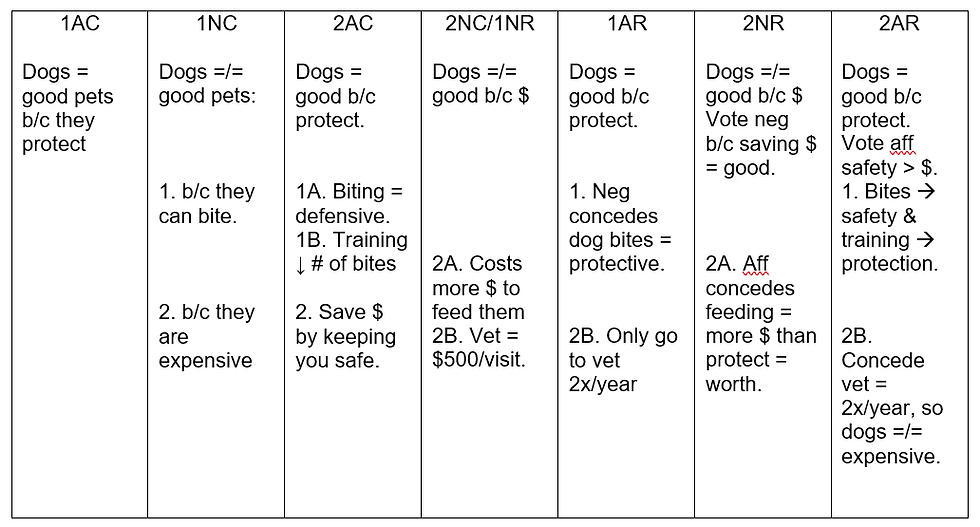
Since this format is so information-heavy, debaters rely on a policy debate flow sheet. This is a specialized note-taking method used to track arguments across the entire round. Learning the policy debate flow is perhaps the most critical technical skill you can develop to ensure you don't miss a single claim or rebuttal.
Understanding the Affirmative Team
The Affirmative team opens the round by proposing a specific plan linked to the year's resolution. They argue that the current state of affairs, or the status quo, is flawed and should be replaced by their proposal.
A unique concept here is " fiat," which allows the affirmative to bypass political reality. They don't have to prove their plan would pass in Congress, only that it should. To win, they typically address issues like:
Significance and Harms: Proving a major problem exists.
Inherency: Showing why the current system fails to solve it.
Solvency: Explaining how their plan creates a better world.
Understanding the Negative Team
The Negative team has a vast toolkit to dismantle the affirmative case, often relying on a rigorous policy debate flow sheet to track and counter every argument. Their strategy is split into two categories:
On-Case Responses: These clash directly with the affirmative’s claims. If the affirmative argues their plan saves lives or cuts costs, the negative uses evidence to challenge the validity of those statistics.
Off-Case Responses: These strategic positions move the debate into new territory:
1. Disadvantages: Arguing that the plan will trigger unforeseen, negative consequences.
2. Counter-plans: Proposing an alternative, more effective solution that is mutually exclusive to the affirmative’s plan.
3. Topicality: A crucial political debate tactic where the negative argues that the affirmative’s plan falls outside the scope of the resolution.
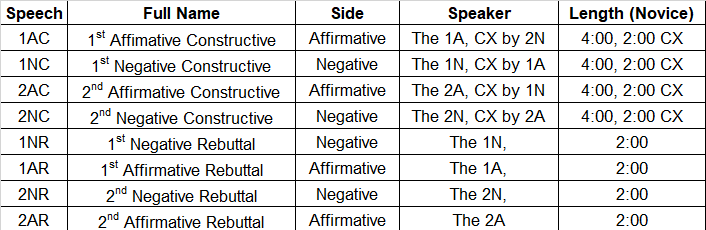
The debate unfolds throughout a series of speeches as outlined below:
Due to the technical nature of these rounds, grasping the policy debate flow is non-negotiable. This is the skill of tracking arguments across columns on your policy debate flow sheet. If you want to excel in a debate competition, you must ensure every claim is answered.
Essential Public Speaking Tips for Students
Even the best research can fall flat without strong delivery. Enhance your public speaking skills by focusing on these areas:
Clarity Over Speed: While high-level debaters use "spreading," remember that clarity is your greatest asset. Use your public speaking tips to ensure your judge can follow the logic of your policy debate flow.
Strategic Signposting: Always tell your judge where you are in the flow. This keeps the round organized and ensures your arguments carry weight.
Refine Your Debate Writing: Invest time in preparing clear cards. High-quality debate writing makes it easier for you to present evidence during the heat of a political debate.
Check out these TED Talk resources for improving your public speaking presence and Harvard's guide on improving your public speaking skills to further refine your delivery and logic.

How to Get Started in Debating?
Join Debating Clubs: Look for debates in school programs. It is the most effective way to practice and receive feedback.
Focus on Research: Successful debaters are defined by their depth of knowledge. Practice identifying instances of policy ineffectiveness in current affairs.
Find a Competition: Once you understand the policy debate structure, enter a debate competition. The real-world pressure is the best way to hone your public speaking skills.
By consistently applying these public speaking tips and tracking your progress on a policy debate flow sheet, you will be well on your way to mastering the art of the political debate.
📌 Want to prepare your school or students for MUNs? Connect with us to bring structured training workshops to your institution.
If you have any queries or would like to submit a guest post, please contact us or email us at cityoneintitiative@gmail.com. Do not forget to like and give your feedback on the blog.



Comments