


How to Debate: Research, Strategy, and Delivery

Whether you're joining a debate club, entering a competition, or defending your view in a meeting, knowing how to debate pays off everywhere. Great debaters aren't born with a gift for arguing. They prepare thoroughly, think strategically, and speak with control. These debating tips break the process into three parts: research, strategy, and delivery.
This guide is also a how to debate for beginners step by step walkthrough, so you can follow it from your first round to your hundredth. If you're brand new to the activity, start with our introduction to competitive debating and then come back here.

Why Debating and Public Speaking Skills Matter?
Strong debating skills do more than win trophies. They sharpen critical thinking, improve your writing, build confidence, and teach you to listen carefully. Employers, universities, and communities all value people who can build an argument and defend it respectfully. They also help you stand out, which is why debate is one of the best foundations for building a personal brand as a student. Be good at all three, and you'll know how to debate effectively, not just how to talk loudly.
How to Research for a Debate?
Most debates are won before anyone speaks. If you're wondering how to prepare for a debate, start with research. Here's how to research for a debate the smart way.
Understand the Topic
These debate research tips will save you hours:
Define the key terms. Vague definitions lead to messy arguments.
Know both sides. Research the opposing position as thoroughly as your own.
Identify the core question. What is the real disagreement?
Collect background first. Read general overviews before diving into specifics.
How to Find Evidence for a Debate?
Knowing how to find evidence for a debate separates average speakers from great ones. Look for:
Statistics from reputable organizations
Expert opinions and peer-reviewed studies
Historical examples and real-world case studies
Recent news that shows the issue's current relevance
Always note the author, date, and publication so you can cite it quickly during the round.
What are the Credible Sources for a Debate?
Not every website deserves your trust. The best credible sources for debate include government databases, academic journals, established news organizations, and respected research institutes. Be cautious with blogs, social media posts, and sites with an obvious agenda. If a judge or opponent questions your source, you want it to hold up. As highlighted by the English-Speaking Union's Mace Handbook, out-of-date or questionable statistics make an argument easy to attack.
How to Write a Debate Case?
Good debate case preparation means organizing your research into a clear, usable system. Create a document or folder with sections for your main arguments, supporting evidence, and anticipated opposing points. Label everything so you can find it in seconds.
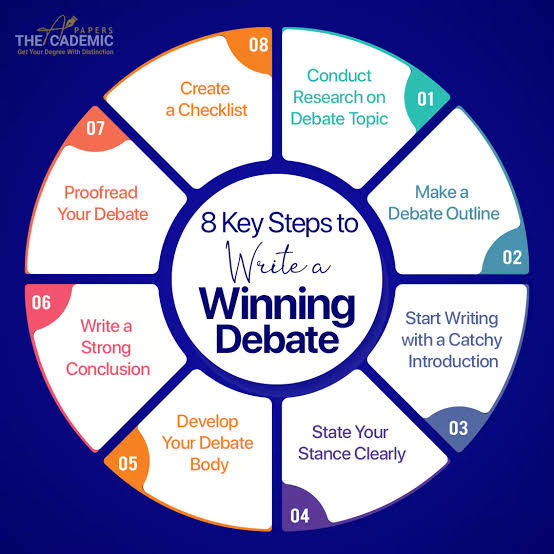
Here's how to build a debate case in five steps:
State your position clearly in one sentence.
Choose two to four strong main arguments.
Support each argument with evidence.
Explain why each point matters (the "so what").
Prepare a short conclusion that ties everything together.
When you learn how to write a debate case, remember that clarity beats complexity. Judges reward arguments they can follow easily. Keep your language simple and your structure tight.

How to Prepare for a School Debate?
If you want to know how to prepare for a school debate, start early and practice often. Read the assigned topic as soon as it's released, split research tasks with your teammates, and schedule a mock round before the real event. Teachers and coaches are great resources, so ask for feedback on your case. The National Speech & Debate Association also publishes student learning resources, which can be helpful in debate prepartion.
Winning Arguments and Debating Tips
With solid research done, it's time to think like a strategist. This section covers debate strategies that work at every level. A reliable debate strategy for beginners is to focus on only a few strong points rather than many weak ones. Depth beats breadth. Pick your best arguments, develop them fully, and defend them consistently.
How to Structure a Debate Argument?
If you're asking how to build a strong argument, make sure each part is logical, relevant, and supported. A strong argument anticipates objections and answers them before the opponent raises them. It also connects directly to the topic and avoids unnecessary tangents.
Learning how to structure a debate argument is one of the most useful habits you can build.
Use this simple formula:
Claim: state your point.
Reason: explain why it's true.
Evidence: back it up with proof.
Impact: show why it matters.
This structure keeps your speech organized and makes it easy for judges to take notes.

How to Rebut an Argument in a Debate?
Knowing how to rebut an argument is a core debating skill. Follow these steps:
Briefly restate the opponent's claim so everyone knows what you're addressing.
Explain why it's wrong, weak, or irrelevant.
Provide your own evidence or reasoning.
Explain why your point outweighs theirs.
Debate Rebuttal Techniques
Effective debate rebuttal techniques include:
Direct refutation: show the claim is factually incorrect.
Turning the argument: show the opponent's logic actually supports your side.
Weighing: concede a small point but explain why your impact matters more.
Pointing out missing evidence: highlight claims made without support.
How to Counter Opponent Arguments
To master how to counter opponent arguments, listen carefully and take organized notes. Divide your page into columns for each speaker, so you can see exactly which points have been answered and which are still open (this method is called flowing) Respond to their strongest points first, since ignoring them makes you look evasive.
Prepare cross-examination questions. Debate rounds reward short, specific questions designed to expose weaknesses. Ask closed questions that require a yes or no answer, and avoid open-ended questions that let your opponent give a speech. Plan a sequence of two or three questions that build toward a clear point you can use later in your own speech.
Spotting logical fallacies in debate gives you a major advantage. Common ones include:
Ad hominem: attacking the person instead of the argument.
Straw man: misrepresenting an opponent's position.
Slippery slope: claiming one step will inevitably cause extreme results.
False dilemma: presenting only two options when more exist.
Appeal to emotion: replacing evidence with feelings.
When you catch one, name it calmly and explain why it weakens the argument. Avoid committing these fallacies yourself.
Parliamentary Debate Tips for Beginners
If your format is parliamentary, these parliamentary debate tips for beginners will help. Learn the speaker roles and time limits, since each speech has a specific job. Practice thinking on your feet, because you often have little prep time. Use points of information wisely, offering and accepting them to show confidence without letting them derail your speech.
Learn How to Win in Every Debate Format
Strategy changes with the format. At City One Initiative, we have blogs covering all sorts of debating, from Asian Parliamentary to British Parliamentary, Oxford-style, policy debate, and more, so you know exactly how to win in each one. Each format has its own speaker roles, time limits, and judging expectations, and understanding them gives you a real edge. A good place to begin is our guide to competitive debating, which explains how the major formats compare.
Tips for Improving Public Speaking Skills in a Debate
Wondering how to speak confidently in a debate? Confidence comes from preparation, practice, and posture. Know your material, rehearse out loud, and speak at a steady pace. Avoid filler words like "um" and "like." Pausing is far more powerful than rushing. Even brilliant arguments fall flat when poorly delivered. This is where public speaking for debate becomes essential.
Debate Speaking Techniques
Useful debate speaking techniques include:
Vary your tone and volume to emphasize key points.
Use signposting. Say "My first point is..." so judges can follow.
Keep eye contact with the judge and audience.
Use short sentences for impact, and save longer ones for explanation.
Persuasive Speaking Tips
These persuasive speaking tips will make your arguments land:
Open with a strong hook, such as a surprising fact or a short story.
Use the rule of three: grouping ideas in threes makes them memorable.
Connect logic with a touch of emotion, without replacing evidence.
End with a memorable closing line that reinforces your main message.
Body Language in Debate
Your body language in debate sends a message before you say a word. Stand tall, keep your shoulders relaxed, and use natural hand gestures. Avoid pacing, fidgeting, or crossing your arms. When your opponent speaks, stay attentive and composed. Judges notice how you react.
Learning how to control nerves before a debate starts with accepting that some nervousness is normal. Try these tactics:
Take slow, deep breaths in the minutes before you speak.
Review your outline, not your whole script.
Visualize yourself delivering a clear, strong speech.
Warm up your voice with a quiet read-through.
Once you're comfortable at home, test your skills in real rounds. Our list of the best MUN conferences in India is a great place to find conferences where you can practice debating, negotiating, and public speaking against strong opponents.
For anyone asking how to prepare for a high school debate competition, build a routine: research weekly, practice speeches twice a week, and attend scrimmages or MUN conferences when possible. Keep an organized evidence file, learn your event's format thoroughly, and review judges' feedback after every round. Small, steady improvements add up quickly.
Learning how to debate takes time, but every round makes you better. Combine careful research, smart strategy, and confident delivery, and you'll be ready for any topic or opponent. Use these debate tips, start practicing today, and keep refining your debating skills with every speech.
Want to prepare your school or students for MUNs? Connect with us to bring structured training workshops to your institution.
If you have any queries or would like to submit a guest post, contact us or email us at cityoneintitiative@gmail.com. Don't forget to like the blog and share your feedback.


Comments